Table of Contents
In the digital era, the way we interact with search engines has changed dramatically. Technology is redefining how we find information, and search engines now need to understand not just keywords, but the context and intent behind every query.
Introduction to Conversational and Visual SEO
The growing popularity of voice-activated devices, such as Siri, Alexa, and Google Assistant, has brought a dramatic shift in how people search for information. It’s not just about typing anymore; it’s about asking our devices directly. With these innovations, conversational SEO has become essential for staying competitive in the digital marketing world.
Visual search is also gaining ground. Thanks to advances in image recognition technology, users can now search for relevant content using photos.
This article provides a detailed analysis of how marketers should adjust their traditional SEO approaches to adopt strategies that integrate semantic and structured searches for both voice and images.
The advancement of technology and its impact on searches
Technology is evolving rapidly. Conversational search capabilities allow search engines to better understand the way we ask questions, resulting in more accurate and personalized answers.
Voice assistants are designed to deliver responses based on natural language phrases. This requires SEO that understands human language and aligns with how we actually speak and ask questions. All of this is powered by artificial intelligence and machine learning—tools that facilitate interaction with our content.
Statistics on Voice-Activated Searches
Numerous studies show a significant increase in the use of voice search. It is estimated that by 2025, 70% of searches will be screenless. This figure is highly relevant for marketers, presenting a unique opportunity to connect with users more directly.
The rise in voice searches also reflects a generational shift. Younger generations are accustomed to using voice as their primary method of interacting with technology. Content creators must adapt to this change, ensuring that their content is optimized to be discovered through voice queries.
The importance of visual searches
Visual searches are not just useful—they are revolutionizing SEO. Search engines like Google are improving their ability to interpret images and provide relevant results based on them. With visual search, marketers have the opportunity to stand out by leveraging optimized content.
To maximize the impact of visual searches, it’s crucial to adopt image optimization best practices such as properly tagging images with Alt text, using analytics to understand image performance, and creating high-quality visual content.
What conversational SEO is and its benefits
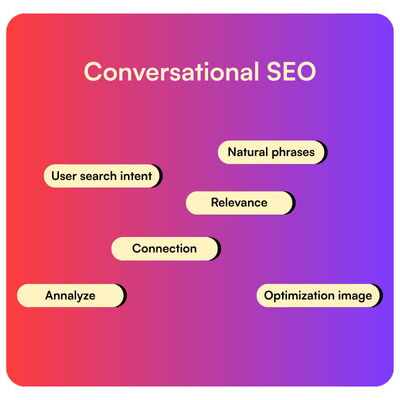
Conversational SEO focuses on creating content that effectively and accurately answers users’ frequently asked questions. This involves not only thinking in terms of keywords but becoming part of a broader conversation.
Adopting a conversational SEO approach allows websites to increase their relevance and connection with users. When a search engine can interpret and answer complex questions, it becomes an invaluable tool for the consumer.
Answering Frequently Asked Questions accurately
To achieve effective conversational SEO, it is necessary to understand how people express their needs. For example, instead of targeting “buy shoes,” one should optimize for “what are the best running shoes for pavement?”
This more natural approach helps search engines provide more relevant answers and allows businesses to connect more deeply with their audience, improving both satisfaction and conversion.
The new era of voice searches
Strategies to optimize content for voice search
Optimizing content for voice search requires a different approach than traditional SEO. It’s essential to structure content so that it directly answers the most common questions in the most natural way possible.
An effective strategy is to analyze the questions your target audience asks and provide those answers directly in your content. Using natural phrases and structuring content in a Q&A format can significantly enhance visibility in voice searches.
Tools like Neotype.ai can be highly beneficial for understanding which types of voice content are most effective. Advanced analytics can guide optimization, helping identify patterns and adjust strategies to maximize impact.
The role of visual SEO and image optimization
Effective Alt tagging techniques
Images are a fundamental part of visual SEO, and one way to ensure search engines “read” them correctly is through Alt tags. These tags not only describe the image but also improve accessibility.
Some steps for effective Alt tagging include:
- Clearly and accurately describe the image.
- Use relevant keywords without overstuffing.
- Keep Alt text concise but informative.
Good Alt tagging not only optimizes images for visual searches but also enhances the user experience.
How to optimize images to improve your visual SEO
Optimizing images is crucial for improving your visual SEO. The key is ensuring images are high-quality and load quickly to enhance user satisfaction.
Consider the following for image optimization:
- Reduce image file size without losing quality.
- Use efficient formats like WebP.
- Implement lazy loading.
These techniques not only improve site loading speed but also ensure that visual content is accessible and engaging.
AI Tools to boost your SEO strategy
Neotype.ai in Content Optimization
In the digital optimization world, tools like Neotype.ai are transforming how we understand and implement SEO. Its ability to analyze search patterns and suggest improvements is invaluable for marketers.
Benefits of using Neotype.ai include:
- Identifying emerging search trends.
- Adopting conversational SEO strategies.
- Automating analysis for semantic optimization.
Implementing these technologies helps keep your content relevant and optimized for the latest search algorithms.
Conclusions and recommendations for the upcoming year
Steps to Stay Up-to-Date with trends
To remain competitive in SEO, it’s vital to stay informed about the latest technological and search trends. Strategic steps to consider include:
- Constantly updating content according to search trends.
- Investing in training on AI-based technologies.
- Participating in industry forums and conferences to share knowledge.
Key initiatives to improve market position
As search evolves, companies must adapt and adopt new optimization practices. Key initiatives include:
- Developing content that directly addresses user queries.
- Using SEO analytics tools to continuously refine strategy.
- Encouraging team collaboration to innovate and optimize.
These measures ensure that your brand is well-positioned to capture the emerging market, driving growth in organic traffic and conversions.